PASTA & BEANS, TRADITION AND VERSATILITY
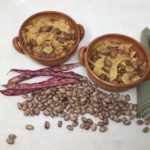
Pasta & beans, pasta & fagioli

Pasta e fagioli (pasta and beans) is a very typical Italian soup, simple, easy, yet incredibly versatile, as it is prepared many ways all across Italy.

For thousands of years, beans have nourished people from every social class, but its richness in proteins allowed the survival of the most of population who could not afford meat. Every region and corner of Italy has a version of this kind of soup, the simplest soup. It is prepared with an incredible set of variations: with the trinity of onion, carrot and celery, the fundamental ingredients of the majority of Italian sauces and stews; just simply with sliced onion and tomato in order to highlight the flavour of the beans, or parsley, or rosemary. In every Italian town and family there is always the addition of a personal touch.

Yet, despite its modesty, it is considered a comfort food, nourishing, simple but heart-warming.

This recipe is the one I rely on as a Romagnola, and I used it to civilize my husband: he had never eaten beans and soups before meeting me, and since he was such a carnivore, my trick was to blend all the vegetables and add some pancetta or ham to disguise the vegetables. It was like a kind of weaning.

Nowadays, sometimes my pasta e  fagioli (the Italian for pasta & beans) is vegan: I often refer to a recipe I was given in Le Marche region by a restaurant owner/chef, which used just onion and tomato for his soffritto. Then of course you follow the recipe as usual. I always have a supply of frozen maltagliati (fresh egg pasta) in my freezer, but if I use dried pasta, I even create a vegan and even lighter dish.

If I am using fresh pasta which cooks quickly, I cook it in the soup directly, in which case some attentive stirring is in order or the pasta will stick to the bottom of the pot. If you prefer using dried pasta – you should  cook it separately and then add it to the soup.

The only tricky part of making this dish is remembering to soak the beans, which if you are me, can be quite tricky, but is most satisfying when you remember. Then you need to remember to cook them, at a gentle simmer for at least a couple of hours while you spend  your time reading everybody’s latest posts. You can use tinned beans. but then you will miss the water the chickpeas were cooked in which provides agreat stock for your soup.

Usually, in most cookbooks, the beans and the soffritto are cooked in 2 different pots, whereas, since washing too many dishes is against my religion, I use always the same one.

Prep Time: 10 minutes | Cooking Time: 40 minutes | Total Time: 50 minutes | Yield: Makes 4  servings.

Ingredients


  • 250g dried chickpeas soaked overnight OR 700g fresh Romano beans
  • ½ onion, finely chopped
  • 2 garlic cloves, finely chopped
  • 1 small carrot, finely chopped
  • ½ celery stick, finely chopped
  • 50 g fresh pancetta or pork jowl, diced
  • ½ cup (130 g) tomato puree
  • 4 tablespoons cup olive oil
  • 6 cups (1.5 L) water
  • 200g maltagliati pasta (fresh pasta) or ditalini

Instructions


In the pot, sauté the vegetables in olive oil, and after 2 minutes, add the pancetta or pork jowl. Cook for 5-6 minutes on medium-low heat.

When the soffritto is golden, add the tomato puree and simmer for 15 to 17 minutes. Add the beans and 4 cups water (1 L water). Season with salt and let it cook, simmering. It takes about 80 minutes if you decide to cook with a normal pot; if this is the case, I strongly recommend a cast iron pot. In a pressure cooker it takes 20 minutes.

In the cast iron pot, you’ll have probably to add the rest of the water, or even more. Just add it gradually. Preferably hot, or you will lower the cooking temperature and it will take longer.

When beans are cooked, remove a ladleful of beans with some liquid and blend with an immersion blender in a container and add it back to the pot. It will give the soup a creamier texture without adding cheese.

Add pasta and follow the indications for cooking time.

When it is cooked, let it sit for 3 minutes and serve.
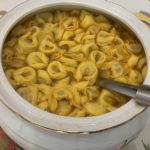


TORTELLINI, THE PASTA INSPIRED BY A GODDESS

The cuisine in Emilia-Romagna is permeated with sexual innuendos, expressed in its iconic stuffed pasta, tortellini. Local legends say that the creation of tortellini was inspired by the goddess Venus herself, who was spotted by an innkeeper while staying at his inn. Stricken by this vision, he rushed to the kitchen, rolled out a sheet of pasta and shaped it like the only part of his beautiful guest’s body he had seen from the lock. Today, the hole in the centre of a tortellino is still called “Venus’ navel”.

I follow my grand-grandmother’s recipe, who was from Modena, and made an all-pork stuffing, whereas in other parts of Emilia they prefer substituting pork loin with beef.

Tortellini are a typical Christmas dish in Emilia, but nowadays you can find them at any time during the winter season.

At Christmas, my family cooks them in a warm capon stock that I prefer preparing one day in advance, in order to refrigerate it in a smaller container overnight to remove the solidified fat from the top of the chilled stock. On normal Sundays, we have tortellini in our traditional meat stock (link).

Making tortellini is quite complicated and time-consuming, and it has always been a team effort. Traditionally, the entire family gathered around the “arzdora” (the mother, the real family boss in Ravenna dialect) to put the filling on the small squares of pasta and shape the tortellini. With their small fingers, women and children were the most capable when it came to sealing the tortellini.

In order to be efficient, the filling and the dough can be prepared one or two days in advance. I love using a piping-bag for the filling, and recently, a chef suggested I refrigerate the dough in a vacuum-bag, since the absence of air in the bag prevents oxidation and the dough from changing colour. Still, it is better to work as a team – at least two skilled people – in order to shape tortellini in time to prevent the sheet of pasta from drying.


Prep Time: 4 hours | Cooking Time: 30 minutes | Total Time: 5 hours | Yield: Makes 10 servings.

Ingredients


For the filling

  • 3.5 oz (100 g) pork loin
  • 1 tbsp dry white wine
  • Sea salt and black pepper to taste
  • 2 tbsp (30 g) butter
  • 1 garlic clove
  • 1 small rosemary sprig
  • 2.8 oz (80 g) Parmigiano Reggiano
  • 3 oz (90 g) Parma ham
  • 3 oz (90 g) Bologna mortadella
  • 2 eggs
  • 1/8 teaspoon nutmeg, freshly grated

For the pasta

  • 6 eggs
  • 4 cups (500 g) all-purpose flour

For the capon stock

  • 1 medium onion, peeled
  • 1 medium carrot, peeled
  • 1 celery stalk
  • Half capon
  • 3 parsley sprigs
  • 4-5 black pepper corns
  • 1 kg (2.5 lbs) various beef cuts used for Italian braised meat like beef tongue, tail, shin bones with meat, marrow bones and bones with a little meat on them, such as oxtail, short ribs, or knuckle bones (cut in half by a butcher)

Instructions

For the capon stock (one day in advance)

Place a large stockpot on the biggest burner. Fill with 4-5 litres/4.5 to 5.5 quarts of cold water (about two-thirds full) and add all the ingredients. Bring the water to the simmering point.

Gently simmer the stock, covered, for 3-4 hours, or even longer if you have time, topping up with water if necessary. Skim the white foam that bubbles to the surface with a slotted spoon.

Strain stock using a fine-mesh sieve and discard bones and vegetables. Let the broth continue to cool until barely warm, then refrigerate in smaller containers overnight. Remove solidified fat from the top of the chilled stock.

For the filling

Add the butter, rosemary, and garlic to a small pan, and sauté the meat. When the meat is roasted externally, add the wine and season with salt and pepper. Cook for five minutes and let it cool down. When it reaches room temperature, coarsely chop and put in a food processor with all the other ingredients. mince at maximum speed until the filling is perfectly blended and is pink in colour. Fill a piping-bag and keep in the fridge. Take it out and keep at room temperature an hour before using it, or it will be too hard to squeeze it out of the piping bag.

For the pasta

On a wooden pastry board, pour the flour into a mound, make a well in its centre and crack the eggs into it. Blend by hand, making a dough that you are going to smooth with a rolling pin.

Divide the dough into two halves, wrap them in plastic wrap and put in the fridge for a couple of hours.

Roll them out, remembering to sprinkle them with flour. Roll each ball of dough into a sheet about 2 mm (1/24 inch) thick.

Cut each dough into small 2-inch (5 cm) squares, and put little piles of filling in each  centre.

Fold the squares into rectangles enclosing the filling. Gently lift one of the long sides against the stuffing at a time, roll around your baby finger and overlap the two corners. Lay on a paper tray or a normal tray covered with parchment, make regular rows and avoid that they come into contact with one another or they will stick together.

Cook them in the boiling stock and serve them still fuming hot.


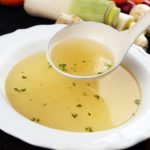
MEAT STOCK FOR HEARTY SOUPS

Meat stock or broth (nowadays the distinction is quite blurred) is a very popular dish in Northern Italy. It is not only used for adding juices to roasted meats, stews and meat sauces during prolonged cooking, but it also creates wonderful dishes on its own. Northern Italy offers a wonderful variety of pastas created to be cooked and served in broth. There is a whole world of different stocks, made with vegetables, beef, chicken, or fumetto made with fish.

This is a family recipe, it includes hen and beef, and the Italian tradition provides many ways to reuse meats that have lost their juices in the stock.

In order to make a sumptuous stock, meats and vegetables are added to the stockpot when water is cold and left simmering for hours.

The traditional family recipes are very simple, you just need to use a very big stockpot, put the ingredients in it and cover with water. Then it must be put on the stove and left gently bubbling for a long period of time.

Now chefs have enhanced the recipe by cutting the onion into two halves and roasting it for few minutes in a non-stick pan. It adds a stronger flavour to the stock, as it extracts the essence of the vegetable.

Prep Time: 20 minutes | Cooking Time: 4 hours | Total Time: 4 hours and 20 minutes | Yield: Makes 2 servings.

Ingredients


  • 1 medium onion, peeled
  • 1 medium carrot, peeled
  • 1 celery stalk
  • 2 medium potatoes
  • 3 cherry tomatoes
  • Half hen or 2-pounds chicken wings
  • 1 to 1.5 kg (2.5 to 3.5 lbs) various beef cuts used for Italian braised meat like beef tongue, tail, shin bones with meat, marrow bones and bones with a little meat on them, such as oxtail, short ribs, or knuckle bones (cut in half by a butcher)
  • Makes 2.5 litres/10.5 cups

Instructions


Place a large stockpot on the biggest burner. Fill with 4-5 litres/4.5 to 5.5 quarts of cold water (about two-thirds full) and add all the ingredients. Bring the water up to the simmering point.

Gently simmer the stock, covered, for 3-4 hours, or even longer if you have time, topping up with water if necessary. Skim the white foam that bubbles to the surface with a slotted spoon.

Strain stock using a fine-mesh sieve and discard bones and vegetables. Let the broth continue to cool until barely warm, then refrigerate in smaller containers overnight. Remove solidified fat from the top of the chilled stock.

Freeze it in ice cube trays and add it to your risotto, stews and roasts.

Dogs love the boiled carrots, and can be given some of the beef bones. The boiled beef is recycled as a stew, in a dish called lesso rifatto or francesina. I add the hen to vegetable soups, to improve the texture.


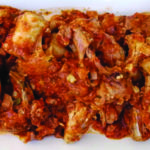
MARCHIGIANA RABBIT STEW

This rabbit stew (the rabbit can be substituted with chicken) is a vintage dish. I found it in a 1970s collection of recipes from an elementary school project in Pergola. Each child was asked to bring one of their grandmother’s recipes to school to assemble a traditional regional cookbook.

Pergola is a tiny hillside village in the heart of the Marche region, a beautiful area that is unfortunately or fortunately out of the tourist mainstream, where a local first-class cuisine still thrives.

In an age where there was no intensive livestock farming in Italy, we followed the seasons for meat consumption so, the end of summer was the best moment to eat rabbit, since those born during the spring had fully grown.

Toss the wonderful fresh home-made noodles with the stew’s sauce in a bowl adding a few tablespoons of the pasta cooking water.

Prep Time: 30 minutes | Cooking Time: 90 minutes | Total Time: 2 hours | Yield: Makes 8-10 servings.

Ingredients


  • 2 rabbits, chopped into small pieces
  • 2 cans of tomato purée
  • 2 onions, finely minced
  • 2 carrots, finely minced
  • 1 celery stalk, finely minced
  • Rabbit liver, finely chopped
  • 1 tbsp parsley, finely minced
  • 2 slices pancetta or prosciutto, finely chopped
  • ½ cup (125 ml) olive oil
  • 3 cups (750 ml) water
  • Salt and pepper
  • Fresh tagliatelle (noodles) 800 grams


Instructions

Place the rabbit pieces in a non-stick saucepan and sauté them until their water content evaporates, about 15 to 20 minutes.

When they are cooked, add all the other ingredients except for the water and tomato, and sauté for 25 to 30 minutes at medium-low heat. Season with salt and pepper and when the vegetables and pancetta are browned, add the water and cook for an hour, then add the tomato and cook for 30 minutes.


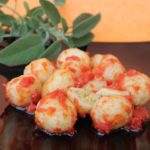
MEAT STUFFED GNOCCHI

The stuffing of this gnocchi is very similar to the one of Ascoli olives, a skilled mix of meats cooked in a soffritto, whose taste is made lighter by a touch of lemon zest. The only complicated phase is finding the procedure to fill the gnocchi; I think that using a piping bag makes the operation a lot easier.

It is quite hard not to find intriguing recipes in Italy: its regional cuisine is extremely rich and varied and, Marche region, not very known by mass tourism, offers us wonderful dishes with meat, vegetables, and fish.

In the near future, I am going to propose some Marche recipes: I learned to appreciate various dishes thanks to some sibling who introduced me to many treats. In addition, some trips in which I explored wonderful restaurants made me appreciate this region even more.

The scarce knowledge of the regional treasures contributed to maintaining an Italian atmosphere, not wretched by the mechanisms of great masses of tourists.

I have always been thinking that the real atmosphere of a country is much better seized in small towns, which tend to be more conservative and contribute to keeping the great Italian culinary tradition alive.

Now the region is living a new awakening, also as a reaction to the destructions caused by an earthquake, which stroke it in 2016: concerts like “Marche Rise Again” and new cycles of art exhibits propose a panoramic view of artistic treasures of the region, like, for instance, the cycle dedicated to Lorenzo Lotto.


Prep Time: 50 minutes | Cooking Time: 40 minutes | Total Time: 1 hour + 30 minutes | Yield: Makes 4 servings.

Ingredients for the stuffing


  • 2,5 pounds (1 kg) white, russet or other starchy potatoes, steamed and peeled
  • 2 cups (250 g.) pastry or “00” flour, plus more as needed
  • 10 oz. (300 g.) mixed meats (chicken breast, pork, and veal)
  • 3 egg yolks
  • 1 carrot, finely minced
  • 1 onion, finely minced
  • 1 celery stalk, finely minced
  • ½ glass of white wine
  • ½ glass water
  • ¼ organic lemon grated zest
  • 1 tablespoon grated Parmigiano Reggiano or Grana Padano
  • 2 tablespoons olive oil
  • 1 tablespoons butter


Ingredients for the sauce


  • 2 tablespoons olive oil
  • 2 garlic cloves
  • 14 oz.  (400 g.)  finely chopped tomato sauce
  • Sea salt


Instructions for making the gnocchi

Heat butter and oil in a saucepan and sauté the vegetables in it. When they are cooked, add the meats roughly chopped. Cook the meats, adding water and wine. Stir the meats and, when the wine has evaporated, cover with a lid and make the meats simmer for half an hour. When it is cooked, take the meats, draining them from the cooking liquid, and put them in a mixer.

Filter the cooking liquid with a sieve, and put it aside. Ground the meats in the mixer, then add the yolks, the Parmigiano, the lemon zest, and the cooking liquid. Mix again. Move the stuffing to a piping bag.:

While the meat is cooking, steam the potatoes for the gnocchi.

For making gnocchi, follow the instructions in this recipe.

Divide the dough into parts bigger than usual, since it must contain the filling. Stuff the gnocchi and close the little balls by rolling them quickly between the palms of your hands.

Lay the gnocchi on a paper tray previously sprinkled with flour.

Instructions for making the sauce

In a non-sticking pan, sauté garlic cloves in oil and discard them when golden. Add the tomato and make it simmer for 10 minutes.

Cook the gnocchi in boiling salted water for few minutes, it can be drained when it floats and poured directly in the pan with the sauce. I suggest using a pastaiola or draining them in batches, using a slotted spoon.


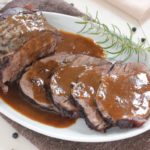
BEEF BRAISED IN BAROLO WINE, REAL ITALIAN LUXURY

A luxurious braised beef in a precious wine like Barolo, again a recipe from Piedmont.A real comfort food,above all if served with polenta and its sauce or with borretane onions.

Beef braised in Barolo is typical of festivities and holidays. This special dish contemplates the cost of the ingredients and the time – both the marinading and cooking time – involved in its preparation.

The secret of its success rests in the quality of the ingredients and the cooking method: after marinading, it is necessary to pat the meat dry and brown it in olive oil to “seal” the meat and avoid its loss of juices.

Prep Time: 30 minutes | Cooking Time: 2 hours | Total Time: 14 hours + 30 minutes (including 12 hours marinating | Yield: Makes 6 servings.

Ingredients

  • 4-pound (1,2 kg) boneless beef roast – chuck or sirloin trimmed of excess fat.  These cuts do well for braising – 1,2 kg
  • 1 1/2 teaspoons coarse sea salt
  • 1/2 cup (5 spoons) extra virgin olive oil
  • 2 medium onions, peeled and diced
  • 4 medium carrots, peeled and diced
  • 3 large celery stalks, diced (the vegetables should be chopped in similar sized pieces to ensure even cooking)
  • 2 plump garlic cloves, peeled with internal germ removed
  • 1 sprig fresh rosemary with lots of needles
  • 5 – 6 whole peppercorns
  • 1 750 millilitre bottle of Barolo wine (if substituting wine for another select a good drinkable red wine and extend the marinating time by 6 hours)
  • Freshly ground black pepper to taste
  • 1 – 2 bay leaves
  • 1 tablespoon + 1/2 teaspoon (50 gr.) butter
  • 3 – 4 whole cloves

Recommended equipment

A heavy saucepan, enamelled cast-iron dutch-oven, glass or ceramic round or oval pan with a cover.  Select a pot in which the roast will fit with no more than 2 inches of space around it.  (The less space in the pot the less wine you’ll need). Select a bowl in glass or ceramic of similar size.


Instructions


Start marinating the meat in the wine and herbs the night before to ensure it marinates a minimum of 12 hours.

Dry the meat with paper towels and place in the bowl.  Add half of the diced vegetables, garlic cloves, the rosemary, peppercorns, and the bay leaves.  Put the remaining vegetables in a covered container and place in the fridge for later when they will be added when cooking the meat.  Pour the bottle of wine over the meat and vegetables ensuring everything is completely submerged. Season with salt and pepper.  Cover the bowl with plastic wrap and place in the fridge (in the warmest section) for at least 12 hours.

When ready to cook, remove the meat from the marinade, dry using paper towels and put the roast into a pan that you have previously added the oil and butter and warmed slightly.  Brown it on all side for 4 – 5 minutes.  Using a slotted spoon remove the vegetables and aromatic herbs from the marinade and add them to the roast.  At this time, add the reserved vegetables from the fridge.  Cook this mixture for 10 – 15 minutes, stirring frequently just until the vegetables soften.  Once the vegetables have softened add all   the marinade, bring to a boil, then reduce heat, cover, and let simmer for approximately two hours.  Rotate the roast so it is submerged in the braising liquid.  Braise this way, turning the meat every 30 minutes, never using a fork that would pierce the meat and cause it to lose its juices.

Once the meat has finished cooking, remove the meat to a platter and cover with tinfoil to keep warm.  Take the saucepan off the burner, remove the rosemary and bay leaves.

Make a puree with the vegetables and marinade together with an immersion blender.  Heat to a boil, reducing the sauce to a consistency that coats the back of a spoon.  Season the sauce to taste with salt and freshly ground pepper.

To serve – slice the meat crosswise (against the grain).  Heat the sauce to a gentle simmer, then spoon over the beef so the slices are lightly coated.

In Italy it is usually served with mashed potatoes or sweet and sour borettane onions.